If you want to build a stronger, healthier lawn, watering it correctly is key.
Constant overwatering or frequent underwatering can damage your lawn.
In this post, we’ll detail exactly how you should water your lawn in the summer to ensure it grows green and healthy.
When to Water Your Lawn
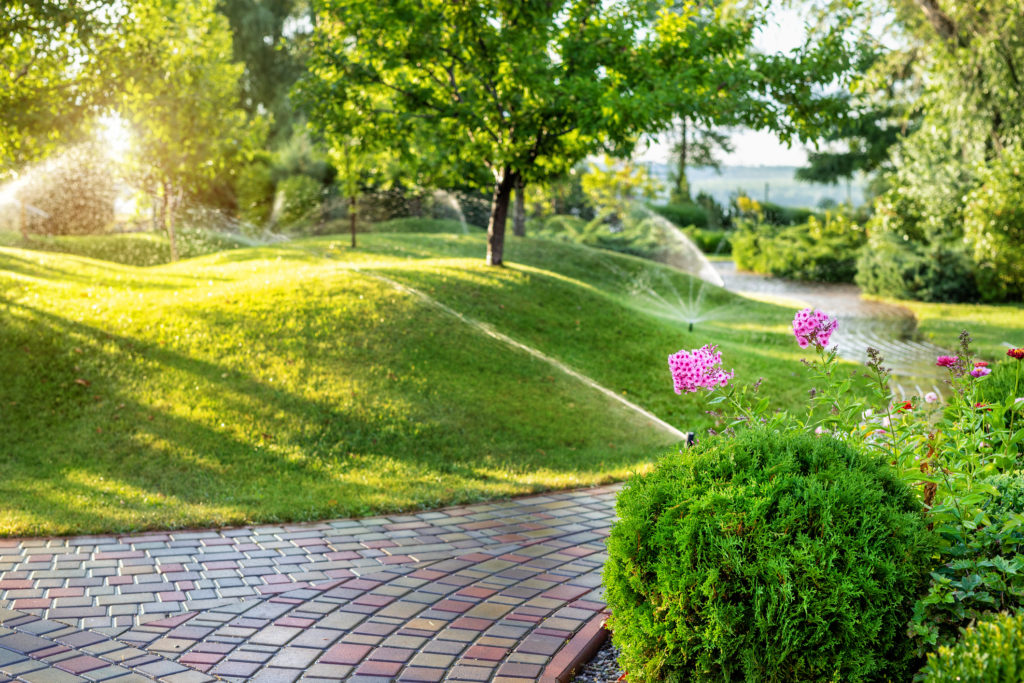
For optimal lawn maintenance, it’s best to water your lawn when the sun goes up (before 10 A.M.). Since it’s cooler during this time of day (and winds are calmer), your grass roots will absorb water before it evaporates.
If your mornings are busy, you can also water your lawn early evenings between 4 P.M to 6 P.M—the only peak time to water in summer evenings (before it gets dark).
How Much Water
Your lawn encounters a lot of stress in hot summer months. Extreme heat dries its roots, causing grass to turn yellow or look faded.
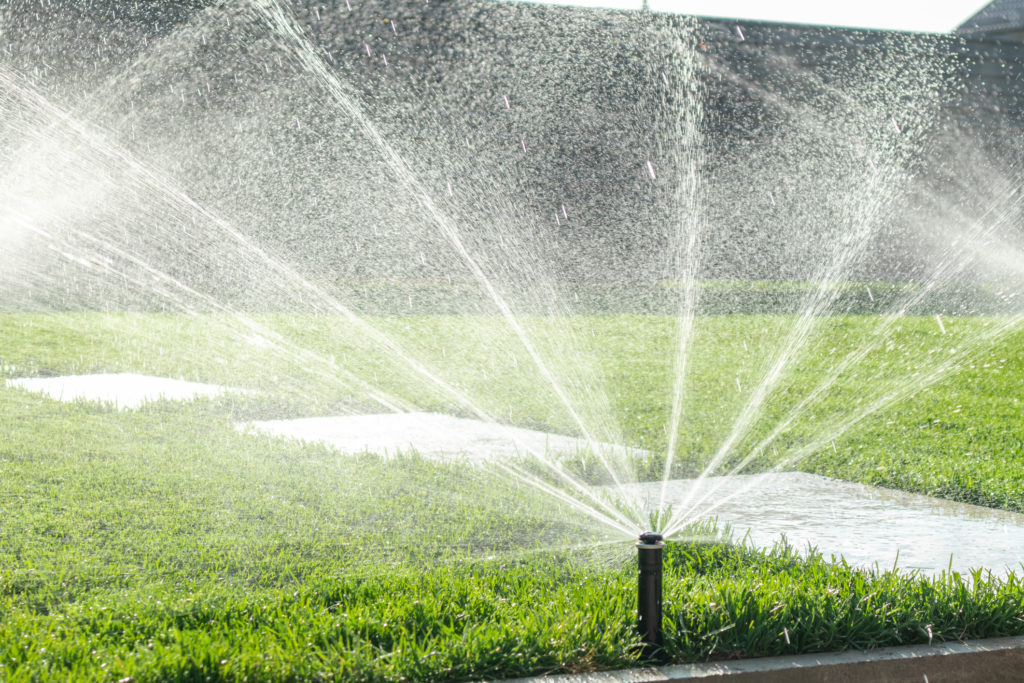
And for a healthier lawn, you need healthy roots first. Which means, your watering practices should moisten your soil 4-6 inches deep. This depth covers the extent of your root zone.
How much water do you need to moisten your soil 4”-6” deep?
- 1″ water for clay soils
- 1.5″ water for sandy soils
But, how do you know when you’ve put out 1” of water?
Here’s a simple test: Place a few old cans (like clean tuna cans) or containers on your lawn the next time you water. Measure a 1” depth (or 1.5” if you have sandy soil), and mark this with a marker or painters tape.
Then, start a timer.
When your containers fill up 1”, you’ve watered the right amount. Track your timer too. The next time you need to turn your sprinklers on, you’ll know how to time your watering just right.
Also, if you’re using a sprinkler system, look to your manufacturer to determine its flow rate. Then:
- Multiply the square footage of your lawn X 0.62 gallons = 1” of water per square foot.
- Now, divide the above # by your manufacturer’s flow rate.
- This result = # of minutes you’ll need to run your sprinkler.

How Often Should You Water
Good news: You don’t need to worry about watering your lawn every day. Since grass only needs an 1”-1.5” of water per week, you can easily hit this goal with one rainfall or run of your irrigation system each week.
When using an irrigation system, water your lawn until the top 6”-8” of your soil is wet (which should give your grass the 1” of water it needs).
Whether you apply this 1” in a single session or space it out over two .5” sessions weekly is up to you!

Signs Your Lawn Needs Water Now
The simplest way to tell if your lawn is going through any moisture stress is to look for footprints.
If you walk on your lawn, and it doesn’t spring back up right after (leaving behind footprints), it’s time to water.